Work
Cosmic Stump
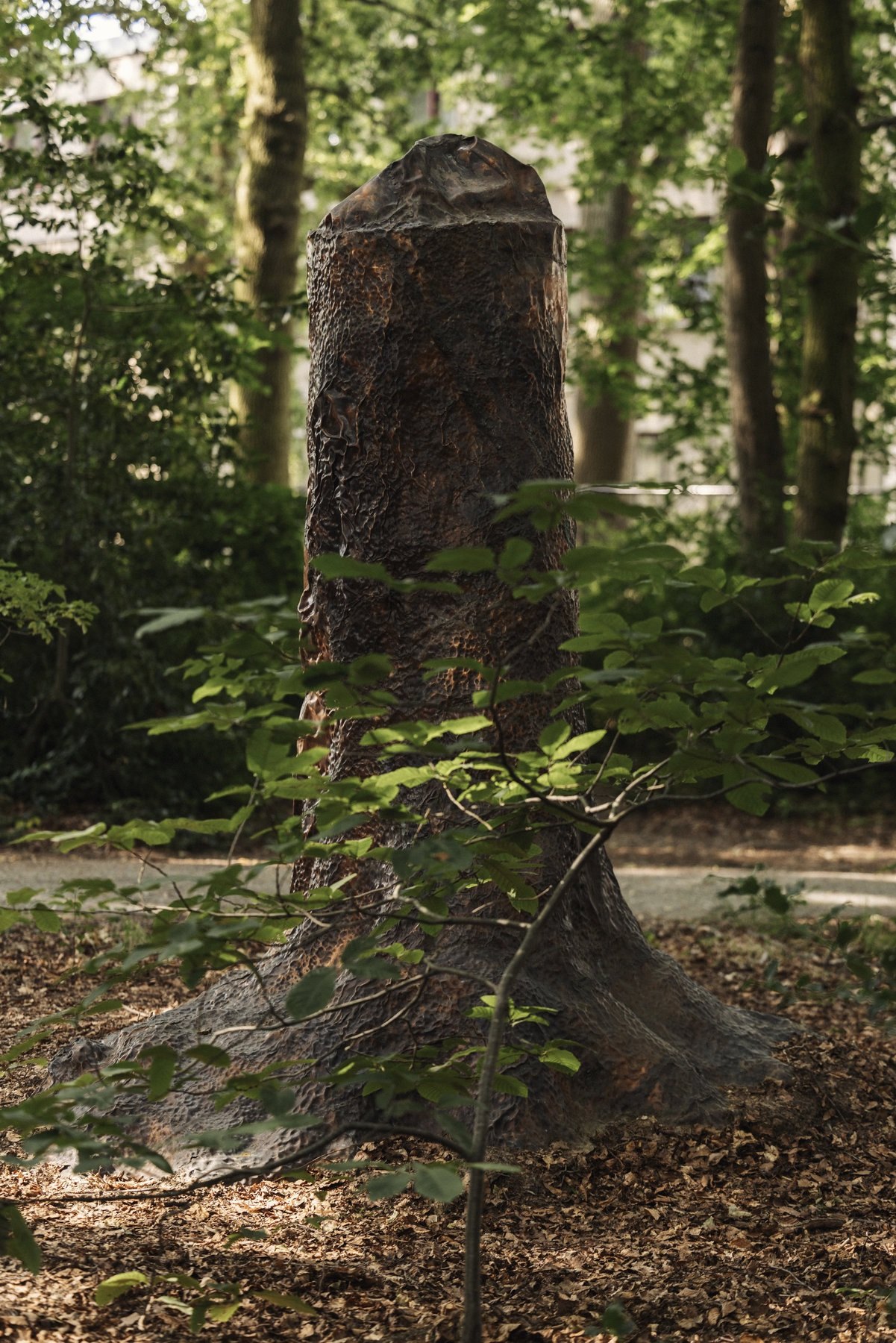
Cosmic Stump (2022) There are monuments that are planned for decades, and there are monuments that emerge from grief. Cosmic Stump began with a death. In 2020, Hadewych Hammenecker, the wife of Professor Willy Sansen passed away. Shortly afterwards, the tree she had loved most—a towering presence in the garden they had shared—also died. Whether by coincidence or by the strange logic of mourning, the loss of the tree seemed inseparable from the loss of the woman. What had once been a living witness to a life together became a silent remnant. Rather than remove it entirely, Sansen chose to preserve what remained. He cut the tree, leaving the stump rooted in the earth, and invited artist Marius Ritiu to transform it into a work of remembrance. The resulting sculpture does not conceal the tree’s death; it amplifies it. Hammered copper envelops the weathered stump like a second skin, neither restoration nor ornament, but a gesture of care. The material appears to have arrived from elsewhere—part meteorite, part geological formation, part cosmic relic. The rough bark dissolves into metallic topographies, as if the tree had begun a slow transformation into something beyond the botanical world. In this sense, Cosmic Stump is not a memorial to absence but to continuity. The tree remains rooted where it stood, while the copper records a passage from one state into another. Life becomes matter, matter becomes memory, memory becomes form. The work acquired an additional layer of meaning in 2025, when Professor Sansen himself passed away. As his family prepared to leave the house, they could not imagine abandoning the sculpture in the garden where its story had begun. Thanks to the care and commitment of his daughters—Katrien Sansen, Marjan Sansen, and Sara Sansen—the work found a new future. Through their efforts and generous donation, Cosmic Stump entered the collection of the Middelheim Museum in 2026, ensuring that a deeply personal act of remembrance would continue its life in the public realm. Today, the sculpture stands as a rare convergence of biography, landscape and transformation. It commemorates a beloved woman through the tree she cherished, honours the devotion of the man who sought to preserve her memory, and reminds us that endings are seldom absolute. Like a tree becoming copper, grief itself can change form—remaining present long after its original shape has disappeared.
Photos by: Tijs Vervecken